
20th July 2025
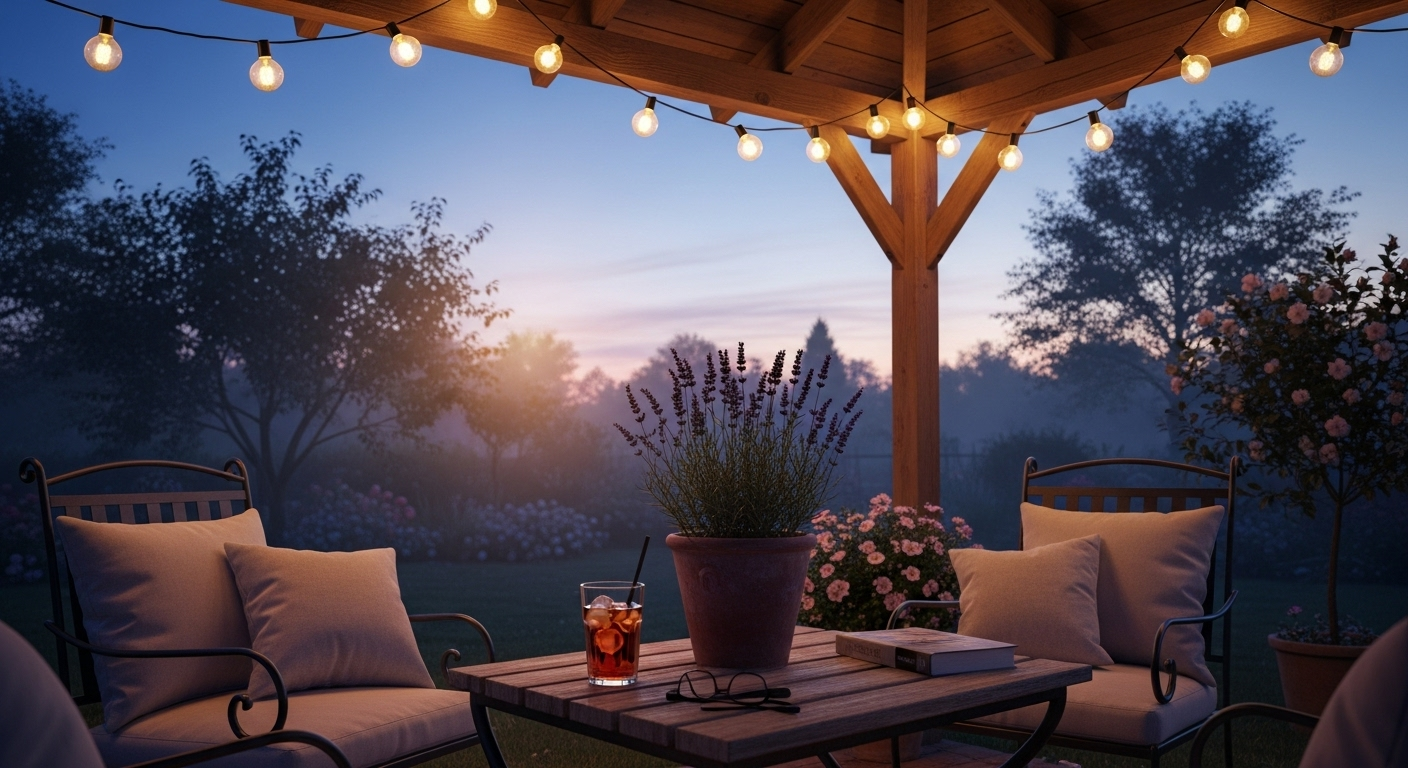
The long, light-filled evenings of summer are finally here. The air is warm, the scent of freshly cut grass hangs in the air, and the garden becomes the heart of the home. It’s where you’ve invested your time, money, and effort—in the perfect patio furniture, the state-of-the-art barbecue, the tools that keep everything pristine, and the summerhouse that serves as your personal retreat. It’s more than just an outdoor space; it’s an extension of your life.
But as the sun sets, this beloved space can become the soft underbelly of your home’s security. Opportunistic thieves know that outbuildings are often seen as secondary priorities, with weaker locks and less oversight than the main house. They know that expensive garden furniture, high-end tools, and bicycles are frequently left unsecured.
Securing your outdoor spaces isn’t about turning your garden into an imposing fortress. It’s about being smart and methodical, creating layers of deterrence that make a potential thief look at your property and decide it’s simply not worth the risk. This guide will walk you through practical, achievable steps to protect your property, so you can enjoy those summer evenings with the complete peace of mind you deserve.
This is your first line of defence, focusing on the outermost boundary of your property. These steps are all about deterrence – making your home look like a ‘hard target’ from the street. By strengthening your perimeter, you create a powerful psychological and physical barrier that can stop a potential intruder before they even set foot in your garden.
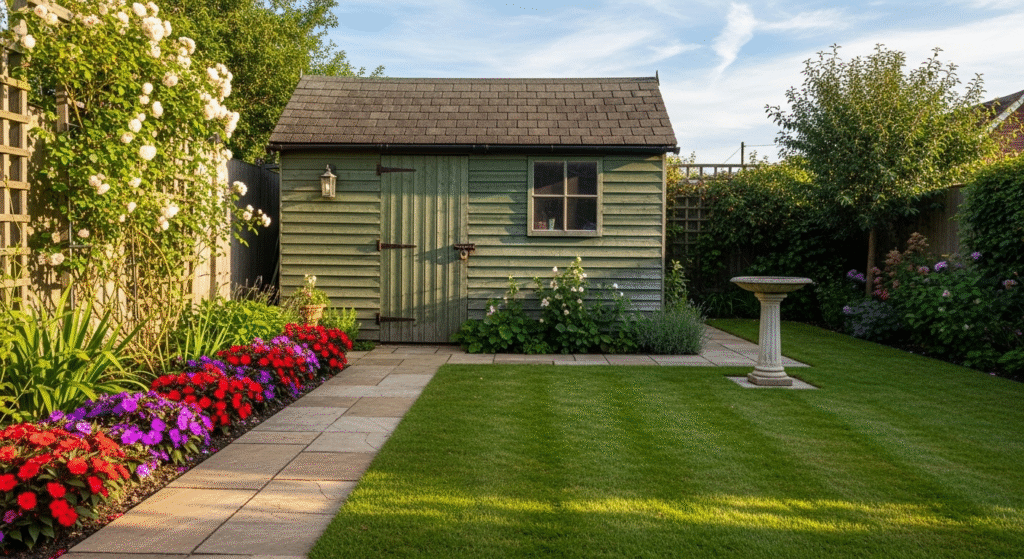
Walk the entire perimeter of your property. Physically push on each fence post. Does it wobble? A wobbly post signals neglect and weakness. Check for any loose or damaged panels. A thief sees this not as a barrier, but as a pre-made door. Taking an afternoon to reinforce posts with concrete spurs or replace damaged panels sends a strong visual message: this property is well-maintained and protected. For an excellent natural deterrent, consider planting dense, prickly shrubs like Holly, Pyracantha, or Berberis along a vulnerable boundary. They are beautiful, but more importantly, they are incredibly difficult and painful to climb through quietly.
You can check your entire fence line in under 15 minutes. Identifying the weak spots is a simple, no-cost first step.
Think of an unlocked gate not as an entrance, but as an invitation. It signals that security is lax. A simple slide bolt is easily defeated. The solution is to fit a strong, key-operated lock, such as a mortice lock or a high-quality gate lock designed for outdoor use. Crucially, this must become a habit. An expensive lock is useless if it’s left undone. Get the whole family into the routine of locking the gate behind them, every single time. This single habit can be one of the most effective security measures you take.
Installing a proper gate lock is a simple DIY job for many, or a quick task for a handyman. The real work is building the family habit of using it.
Don’t arm your opponent. After a satisfying day of gardening or DIY, it’s tempting to leave tools out for the next day. But a thief sees that ladder not as something to help you paint, but as a perfect tool to reach a first-floor window. A spade is not for digging; it’s a lever to pry open a door. Heavy garden ornaments can be used to smash glass. By taking five extra minutes to lock everything away in a secure shed or garage, you are actively disarming any potential intruder and forcing them to bring their own noisy, heavy tools—a risk many are unwilling to take.
This is a zero-cost change. Simply add “put tools away” to your end-of-day routine, just like washing your hands.
If an intruder manages to cross your perimeter, this is your second layer of defence. This section focuses on the outbuildings themselves – your garage, shed, and summerhouse. The goal here is to make these structures as difficult and time-consuming to breach as possible, transforming them from vulnerable storage units into secure mini-fortresses.
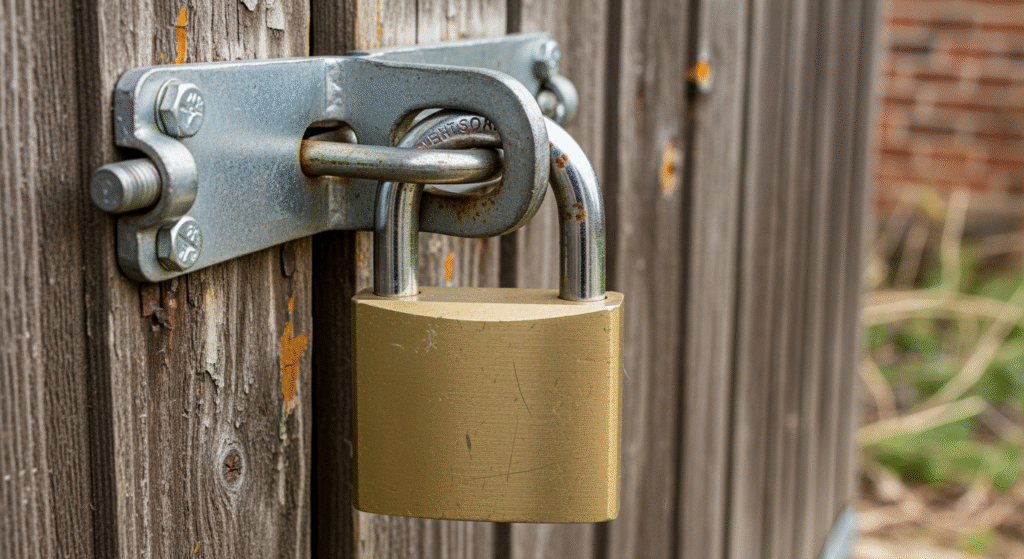
The default locks on most sheds are designed for privacy, not security. The screws are often short and the metal is flimsy. A determined kick or a pry bar can defeat them in seconds. Upgrade the hasp and staple to a heavy-duty version secured with coach bolts, which have smooth, rounded heads that can’t be unscrewed from the outside. Pair this with a high-quality, closed-shackle padlock, which protects the metal loop from being cut by bolt cutters. For windows, simple key-operated locks prevent them from being popped open. To stop thieves from seeing what’s inside, apply frosted privacy film—it’s cheap, effective, and easy to install.
You can buy a full heavy-duty lock set online or from a hardware store. It’s a satisfying and high-impact upgrade you can complete in an hour or two.
Assume for a moment a thief gets inside your locked shed. What’s their plan? To grab the most expensive items and leave as quickly as possible. You can foil this plan with a secondary, internal layer of security. For very expensive bicycles, quad bikes, or ride-on lawnmowers, install a ground anchor. This is a heavy-duty steel loop that you bolt directly into the concrete floor. Chaining your items to this anchor means a thief can’t simply wheel them away. They would need heavy, loud, industrial-grade angle grinders and a lot of time—all things they desperately want to avoid.
A ground anchor kit comes with all the necessary hardware. If you have a drill, you can install one. It’s the ultimate “grab-and-run” prevention.
An un-alarmed outbuilding is a silent playground for a thief. They can work undisturbed. A simple, battery-operated shed alarm from a DIY store can provide a surprisingly loud deterrent. However, for true integration, the best solution is to have your outbuilding professionally linked to your main house alarm. A wireless door contact or motion sensor inside will treat a break-in to your shed with the same urgency as a break-in to your kitchen—triggering the main siren and, most importantly, sending an instant alert to your phone.
Linking an outbuilding to a modern wireless alarm system is often straightforward and doesn’t require running cables across your garden.
This is the active, intelligent layer of your security. While physical barriers deter and delay, technology detects and alerts. These steps are about using smart devices to create a 24/7 virtual watchdog that actively monitors your property, notifies you of any suspicious activity, and captures crucial evidence, giving you ultimate control and peace of mind.

Darkness is a thief’s best friend. It provides cover and concealment. Motion-activated security lights are a simple but brilliant way to rob them of this advantage. When an intruder steps onto your property, they are suddenly flooded with bright light. This creates a “spotlight effect” that induces panic. They are no longer invisible; they are exposed to you, your neighbours, and anyone passing by. This psychological shock is often more than enough to make them turn and flee.
An electrician can fit a security light quickly, or you can find excellent solar-powered or battery-operated options that require no wiring at all.
A visible, professional CCTV camera is the ultimate statement of security. It tells any potential thief that your property is under 24/7 surveillance. This isn’t just about deterrence; it’s about evidence and control. Modern systems allow you to check a live feed of your garden from your smartphone while you’re on holiday, giving you unparalleled peace of mind. Should an incident occur, you will have high-definition footage that can help identify, which is invaluable to the police. It changes the equation for a thief from a low-risk gamble to a high-risk certainty of being caught.
A professional installation ensures cameras are placed in the optimal, tamper-proof positions, covering blind spots and providing the most useful fields of view.
By taking these thoughtful, layered steps, you are actively taking control of your home’s security. You are turning weak points into strengths and transforming your vulnerable outdoor spaces into a protected, secure extension of your home. It’s a project that pays you back with something invaluable: the freedom to truly relax and enjoy your garden, day and night.

We’ve talked about alarms for your outbuildings, but how do modern smart alarms really work to protect your whole home? They do much more than just make a noise.
Join us next week for our new blog post: “How Smart Alarms Work: Beyond the Siren to Instant Alerts on Your Phone,” where we’ll dive into the technology that puts total home security right in the palm of your hand.
Ready to enjoy your summer evenings, worry-free? Contact us today for a free, no-obligation site survey to design the perfect outdoor security solution for your home.
Surveillance & Security Systems | 01205 461482 | Blog History
Please wait while the page opens.
Elapsed: 0 seconds
Please keep this page open.