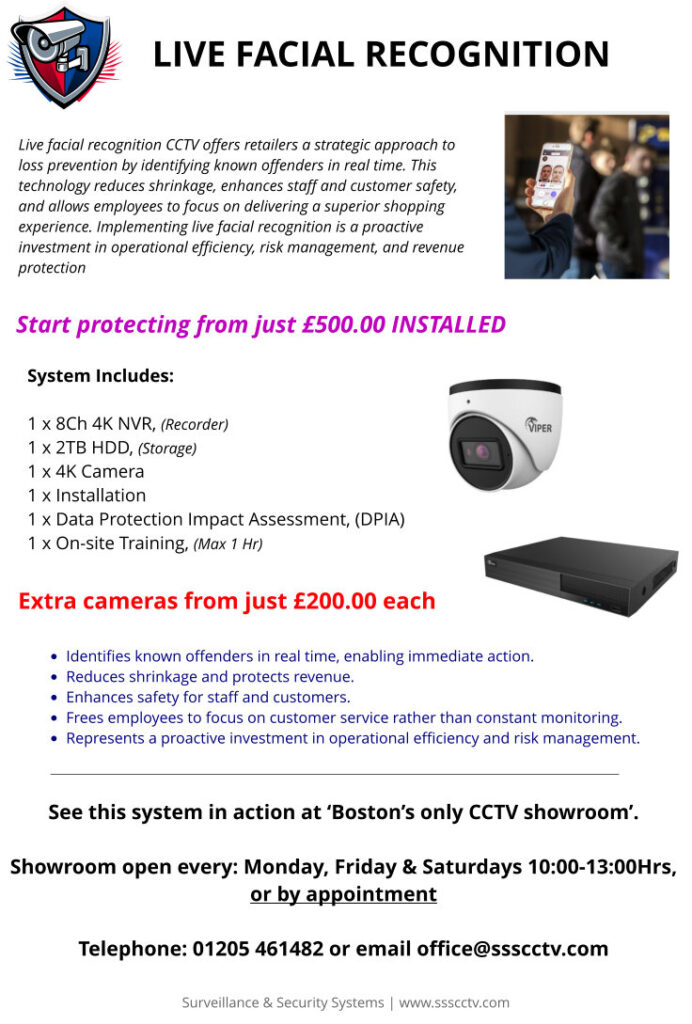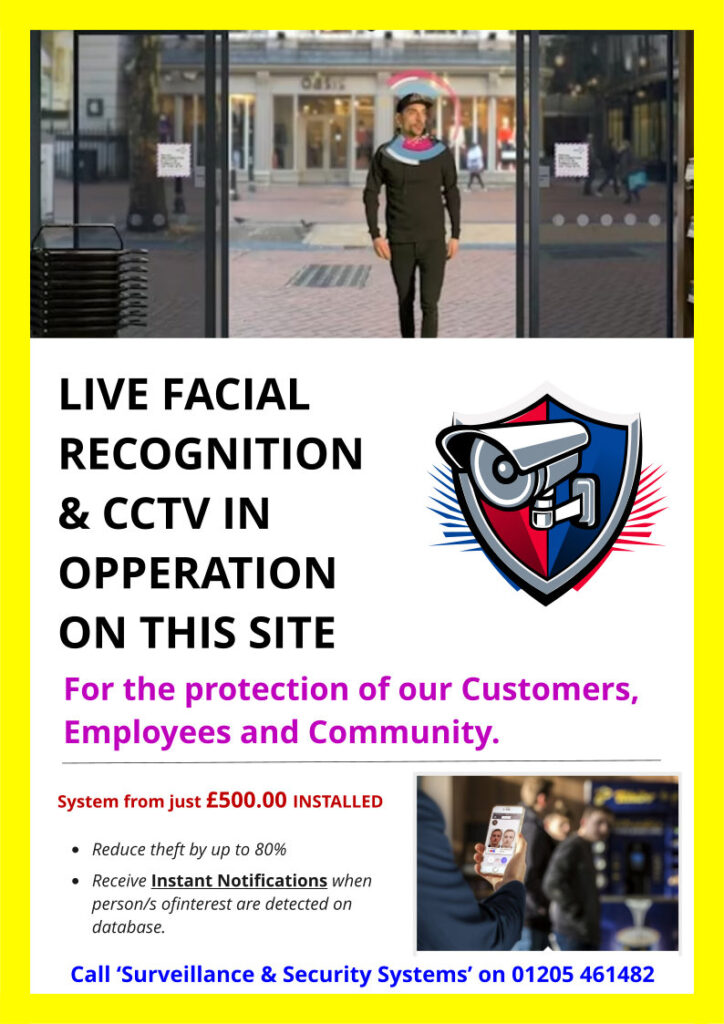
Shoplifting costs retailers millions each year, and traditional CCTV alone is no longer enough to stay ahead of increasingly sophisticated theft. Live facial recognition CCTV offers a powerful solution by identifying known offenders the moment they enter a store, allowing staff to act quickly and prevent crime before it happens. Unlike standard surveillance, this advanced technology provides real-time alerts, reducing losses, protecting staff, and creating a safer shopping environment for genuine customers. It not only deters repeat offenders but also frees up employees to focus on customer service rather than constantly monitoring suspicious behaviour. By investing in live facial recognition CCTV, businesses take a proactive stance against theft, safeguard their profits, and send a clear message that shoplifting will not go unchecked.
Identifies known offenders in real time, enabling immediate action.
Reduces shrinkage and protects revenue.
Enhances safety for staff and customers.
Frees employees to focus on customer service rather than constant monitoring.
Represents a proactive investment in operational efficiency and risk management.
Implications for a shop using LFR to prevent shoplifting
A shop would need to justify that using facial recognition is necessary (e.g. lots of shoplifting already, other methods insufficient).
- You will have to do a DPIA before deployment, (see below).
- Must have a legal basis under UK GDPR and a clear Article 9 condition.
- Must have policies about retention/deletion of images; unmatched faces shouldn’t be kept.
- Signage must inform customers/visitors that face recognition is used.
- Should evaluate potential for bias (make sure the system is accurate and fair).
- Be ready to respond to subject access requests (people asking to see images or data held about them).
- Secure data storage and restricted access; if using third-party vendors, contracts must ensure data protection compliance.
.