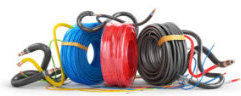
Cables are all the same, right? You might think so, but when it comes to CCTV, that’s far from the truth. To keep prices down, many companies use CCA (Copper Clad Aluminium) instead of solid copper. CCA is cheaper to produce, but it comes with a number of drawbacks that can cause serious issues over time.
One of the biggest differences is resistance. Solid copper cable has far lower resistance than CCA, which means far less voltage drop over long cable runs—a critical factor for CCTV cameras that operate on low voltage, such as 12 V DC or PoE. Higher resistance in CCA means cameras can end up receiving less voltage, which can cause image dropouts, infrared LEDs flickering at night, or even cameras rebooting or failing to start. Solid copper also handles higher bandwidth more effectively, transmitting data with less signal loss—important for HD analogue formats such as HD-TVI, AHD, CVI, and for IP CCTV.
Durability and reliability are also compromised when using CCA. Aluminium beneath the thin copper coating oxidises much faster than pure copper, increasing resistance over time and leading to intermittent faults. CCA also runs hotter under the same electrical load, which can shorten cable life and damage insulation. On top of that, aluminium is more brittle, making CCA more prone to breaks during installation or when cables are repeatedly moved or bent.
When it comes to compliance and safety, solid copper again comes out ahead. Many recognised electrical and data standards, such as IEEE for Ethernet, require solid copper conductors to meet performance specifications. CCA often fails to meet these standards and can also fall short of certain fire safety certifications that solid copper cables can pass.
While CCA may look attractive because of its lower price tag, the hidden costs quickly add up—more frequent service visits to fix voltage or signal problems, early replacement due to shorter lifespan, and the risk of damaging expensive equipment such as PoE switches or NVRs. Over time, solid copper is the smarter investment for both performance and reliability.